"Books before boys because boys bring babies."
-- a great example of alliteration/an important life lesson for us all, brought to you by one of my Form 3 students
Saturday, August 4, 2012

Notes From The Warm Heart
Last week marked my one-and-a-half-month anniversary in a place where pine trees grow next to banana trees, electricity is scarce but cell phones are ubiquitous, photos of Madonna hang next to images of the Madonna, and the question “Where do you pray?” takes precedence over “What do you do?”
I’ve been skirting around the task of detailing all that has happened, in large part because so much of it defies summary. The bare facts are important, certainly, but they only skim the surface: I’m more than halfway through training, I’m nearing the end of my six-week stay in the village of Katsekaminga, I’m practice teaching at a local secondary school, and I’m learning the minority language of Chitumbuka while living with a Chewa family in an overwhelmingly Chichewa-speaking community (sort of akin to learning Italian among Spaniards). By this time next week, I will finally know the name of my home for the next two years, but for now all I know is that it will be in the north, the region with the highest literacy rates, smallest class sizes, longest history of missionary-led education, and lowest population density.
But this paints only a skeletal outline of my life here; it is missing the flesh of my days. It lacks the little glimmers that, in many ways, matter most of all: the inky nights, the smoky mornings, the gecko on my wall, the permanent film of red dust coating everything I own, the pack of dogs that has become our fan club, and the gang of children who know me as “Jane.” I like those better.
So, to chase down an illustrative gleam, here are some selected-straight-from-my-journal moments that capture the ups, the downs, and the in-betweens of one month of life in the warm heart:
July 3, 2012
I watched my amayi cook sima [the hearty, gooey, intestine-clogging, amorphous, porridge-like staple of Malawian cuisine, which appears in similar forms but under different aliases all over sub-Saharan Africa] for the first time a few days ago – a process that removed some of the mystery surrounding the food, but was, fittingly, presented to me in near-darkness.
In the mud-slab-and-concrete theatre of the kitchen hut, the stage was set. My amayi sat hunched in one corner, nursing the charcoals and ladling corn flour into a rickety pot; my ten-year-old sister Aisha stood poised in another, balanced one-legged in a flamingo contrapposto and pointing a flashlight at the floor; and the mixture itself groaned and popped between them, beginning to rise into a thick mound of maize-paste as it was beaten and spun by the twirl of a spoon.
The effect was alchemic, and the potion grew fast – building in ferocious little spurts, big billowing rumbles, and intermittent soft sighs until the mass seemed to move almost with a life of its own, bucking and twisting and growling as if in protest. It wasn’t long before plumes of smoke were spouting through the windows into the fading evening glow, creating a scene of high drama worthy of a painting. This was no longer merely the preparation of dinner; this was war. By the epileptic pulse of the fire, everything seemed to be cast in chiaroscuro, a play of light and dark flashing over my amayi’s focused gaze, illuminating my sister's ballerina-at-rest pose.
Finally, my amayi sat back with a sigh, poked the last gas bubbles out of the sima, and watched it deflate. "Eet ees a very biiiiiiig job," she announced, corralling it into six plate-sized patties.
As she finished the task, half-haloed in light and half-obscured by shadows, all I could think was how impressed I was – by the show, by the process, and undoubtedly by her – but most of all by sima, the only corn-based food that has to be tamed before you can eat it.
July 8, 2012
Priceless moments:
- My Chitumbuka teacher Maggie, after realizing she has kept us ten minutes late, rocket-ships the marker in her hand onto the table while screeching, "SOOOOORRRRY." I lose it.
- My amayi, noticing me gingerly testing the temperature of my sima, reaches over and begins slicing it into bite-sized pieces with a spoon. I laugh and say, "Oh, I'm just like a baby." She laughs and says, "Yes! You are my baby! Janie baby, baby Janie."
- Greeting from a very drunk, notably bra-less woman in the market today: "I KNOW YOU HAVE LOTS OF MOOOONEEEEY."
- Agatha, one of the Chichewa instructors, crafts the greatest pun of all time: "Chimnastics." (A chim = a pit latrine demanding nearly acrobatic precision. Agatha = a non-native English speaker. The moment = explosively funny.)
- My host brother Patrick, in a scene that is certainly one of my favorite mental photographs so far: picture an eight-year-old boy clad in shorts and green rubber boots, buried under a fur-trimmed parka in 50-degree weather (hood up), working on a popsicle while watching the Chichewa-subtitled version of Kung Fu Hustle.
It’s at times like these that Pliny the Elder’s words keep cycling through my head: “Out of Africa, always something new.”
July 10, 2012
We get ferried between villages via Peace Corps jeeps, which affords the unique privilege of getting a sense of topography at 40 mph. Usually it's accompanied by giddy revelry, but tonight we pulled away from Mpalale half an hour late, in fading light, and something felt different.
Everywhere I was struck by the rustling of human life tucking itself in for the night – the hills were lit in a constellation of cooking fires, the roadside punctuated by groups of children no older than ten huddled around their own tended flames. It was a landscape completely without electricity but still studded with lights, each connected to a person. There was something about being surrounded by such bright, visual evidence of human presence –– and about being aware of myself hurtling past, spitting out dust, encased in a box of steel and plexiglass on wheels – that left me feeling very close yet very far away. That basic sense of imbalance is such a large part of why I'm here, but it's also such an unwieldy emotion – difficult to define, tricky to unpack, and even more difficult to place into appropriate action.
We passed a woman in her forties carrying a pail of water on her head – a pretty ordinary sight around here, but something about the splash of the liquid and the steady directness of her gaze that caught my eye. She was taking slow, rocking steps through the darkness from a borehole of unknown location to a destination of unknown address, probably making a trip she makes everyday, likely several times a day, and Ke$ha was playing, the abrasive whine of "Tik Tok" grinding from someone’s speakers. As the water was sloshing out, the woman glanced in our car and met my gaze for a split-second, and the moment passed unnoticed by everyone else but it filled me up and sucked me dry all at once, leaving me lurching with a feeling I still can't quite place. "E'rbody getting crunk, crunk / Gotta slap him if he's getting too drunk, drunk," the song continued, and the juxtaposition made me reel. But what I felt was not quite pity and not quite guilt but mostly vast, vast space: a sort of separate, distant awe.
There's a passage in A Tale of Two Cities that has been reverberating in my head for the past 24 hours or so, and I'm sure it's at least tangentially responsible for my frame of mind tonight. (It may also be aided by the fact that I took my weekly dose of the malaria drug Meflaquine today):
"A wonderful fact to reflect upon, that every human creature is constituted to be that profound secret and mystery to every other. A solemn consideration, when I enter a great city by night, that every one of those darkly clustered houses encloses its own secret; that every beating heart in the hundreds of thousands of breasts there is, in some of its imaginings, a secret to the heart nearest it! [...] In any of the burial-places of this city through which I pass, is there a sleeper more inscrutable than its busy inhabitants are, in their innermost personality, to me, or than I am to them?" (Dickens 8)
Even while living among Malawians, I’m still hurtling down a dirt road listening to a song about brushing your teeth with Jack Daniels. And the more I think about that woman on the road, the more I am astounded by the fact that we inhabit such distinct, disparate, and mutually unknowable worlds. But there is one thing that staggers me more: the fact that we all do.
July 18, 2012
Recent eye-gems from the market:
- A boy of about fourteen walks by, pushing a makeshift model car made of chicken wire and bottle caps. He’s heartwarmingly conspicuous – gangly and puppyish, sparkling with ingenuity, but perhaps just a little too old to be playing with toys.
- The crowd parts to reveal a man running full-tilt after an escaped ox who happens to be heading my way. People are scattering off the road in a rush; the ox ambles by in no particular hurry, in no particular direction, and allows itself to be caught near a patch of grass.
- A woman walks by pushing a wheelbarrow – or rather, the skeleton of a wheelbarrow – with the support beams intact and the basket missing. A toddler stands in the middle, walking along where the basket ought to be, in what I can only assume is the Malawian equivalent of a stroller.
August 4, 2012
On a Saturday afternoon not long ago, I had a cake-baking date with a Chitumbuka speaker named Aida, an assignment that required the procurement of eggs, milk, and flour (known colloquially, and pretty darn adorably, as flawu). The baking powder, salt, and sugar (the ishuuuuug) would be provided, I was told, and the eggs and milk did not take long for me to find and barter for in the market – but I decided to wait on the flawu. “Your amayi will have some,” someone had said, apparently with enough sagacity that it seemed unquestionably believable. “Just buy some from her. You don’t need that much.”
After lunch, with elaborate mime and stilted Chitumbukewinglish, I approached my amayi with what I assumed would be a simple proposal – I asked if she had a half-kilo of flawu I could buy. She assumed the typical expression that appears anytime I try to voice an unrehearsed thought: a sort of squint-eyed straining, halfway between looking askance at a solar eclipse and recoiling from a beginner violinist, but always paired with a smile. After taking a beat to process my wobbly sentences, a flash of recognition passed over her face.
“Flawu?” she asked.
“Yes,” I said.
“You are making cake?”
“Yes.”
“Half-kilo?”
“I think so. You have some? I have kwacha.”
“Mmmmm.” Another pause, for mental calculations. “One-fifty kwacha.”
“Okay! Great! Thank you!” I said, handing the money over while thanking her profusely.
And with that, I thought the task was over. I expected my amayi to walk into the kitchen hut and emerge with a scoop or two, or perhaps to pull out a bag from the grain storage room, but instead she dipped into a semi-bow, spun on her heels, and slipped out of our compound briskly, imploring, “Wait – I am coming.” Already I could tell there had been a misunderstanding – or rather, a false presumption – on my part.
Ten minutes passed, and I prayed that she had just gone to a neighbor’s house.
Twenty minutes passed, and I began rehearsing an apology in Chichewa.
Thirty minutes passed, and I resigned myself to the fact that my amayi was making a trip all the way to the market, which I had just returned from, to buy me the flawu that I could have gotten myself.
Forty minutes after the original question had been posed, my amayi trotted into the compound, sweating and panting a little, and I burst out of my room spouting every apology in every Bantu language I could think of.
Her reaction could not have been better: joyous, uproarious mirth. She laughed the loudest I had ever heard her laugh at that point (a record that was later shattered when I tried to stir sima for the first time), gave me a rib-crushing hug, and said, “Ai, no, mami! Don’t worry! Be happy!”
And that is the story of how I fell in love with this place all over again.
Epilogue: the cake was a minor disaster, burned on the outside and ciabatta-like on the inside. I presented it to my amayi in crumbs and pieces stuffed in a plastic bag. She devoured it and loved it.


I’ve been skirting around the task of detailing all that has happened, in large part because so much of it defies summary. The bare facts are important, certainly, but they only skim the surface: I’m more than halfway through training, I’m nearing the end of my six-week stay in the village of Katsekaminga, I’m practice teaching at a local secondary school, and I’m learning the minority language of Chitumbuka while living with a Chewa family in an overwhelmingly Chichewa-speaking community (sort of akin to learning Italian among Spaniards). By this time next week, I will finally know the name of my home for the next two years, but for now all I know is that it will be in the north, the region with the highest literacy rates, smallest class sizes, longest history of missionary-led education, and lowest population density.
But this paints only a skeletal outline of my life here; it is missing the flesh of my days. It lacks the little glimmers that, in many ways, matter most of all: the inky nights, the smoky mornings, the gecko on my wall, the permanent film of red dust coating everything I own, the pack of dogs that has become our fan club, and the gang of children who know me as “Jane.” I like those better.
So, to chase down an illustrative gleam, here are some selected-straight-from-my-journal moments that capture the ups, the downs, and the in-betweens of one month of life in the warm heart:
July 3, 2012
I watched my amayi cook sima [the hearty, gooey, intestine-clogging, amorphous, porridge-like staple of Malawian cuisine, which appears in similar forms but under different aliases all over sub-Saharan Africa] for the first time a few days ago – a process that removed some of the mystery surrounding the food, but was, fittingly, presented to me in near-darkness.
In the mud-slab-and-concrete theatre of the kitchen hut, the stage was set. My amayi sat hunched in one corner, nursing the charcoals and ladling corn flour into a rickety pot; my ten-year-old sister Aisha stood poised in another, balanced one-legged in a flamingo contrapposto and pointing a flashlight at the floor; and the mixture itself groaned and popped between them, beginning to rise into a thick mound of maize-paste as it was beaten and spun by the twirl of a spoon.
The effect was alchemic, and the potion grew fast – building in ferocious little spurts, big billowing rumbles, and intermittent soft sighs until the mass seemed to move almost with a life of its own, bucking and twisting and growling as if in protest. It wasn’t long before plumes of smoke were spouting through the windows into the fading evening glow, creating a scene of high drama worthy of a painting. This was no longer merely the preparation of dinner; this was war. By the epileptic pulse of the fire, everything seemed to be cast in chiaroscuro, a play of light and dark flashing over my amayi’s focused gaze, illuminating my sister's ballerina-at-rest pose.
Finally, my amayi sat back with a sigh, poked the last gas bubbles out of the sima, and watched it deflate. "Eet ees a very biiiiiiig job," she announced, corralling it into six plate-sized patties.
As she finished the task, half-haloed in light and half-obscured by shadows, all I could think was how impressed I was – by the show, by the process, and undoubtedly by her – but most of all by sima, the only corn-based food that has to be tamed before you can eat it.
July 8, 2012
Priceless moments:
- My Chitumbuka teacher Maggie, after realizing she has kept us ten minutes late, rocket-ships the marker in her hand onto the table while screeching, "SOOOOORRRRY." I lose it.
- My amayi, noticing me gingerly testing the temperature of my sima, reaches over and begins slicing it into bite-sized pieces with a spoon. I laugh and say, "Oh, I'm just like a baby." She laughs and says, "Yes! You are my baby! Janie baby, baby Janie."
- Greeting from a very drunk, notably bra-less woman in the market today: "I KNOW YOU HAVE LOTS OF MOOOONEEEEY."
- Agatha, one of the Chichewa instructors, crafts the greatest pun of all time: "Chimnastics." (A chim = a pit latrine demanding nearly acrobatic precision. Agatha = a non-native English speaker. The moment = explosively funny.)
- My host brother Patrick, in a scene that is certainly one of my favorite mental photographs so far: picture an eight-year-old boy clad in shorts and green rubber boots, buried under a fur-trimmed parka in 50-degree weather (hood up), working on a popsicle while watching the Chichewa-subtitled version of Kung Fu Hustle.
It’s at times like these that Pliny the Elder’s words keep cycling through my head: “Out of Africa, always something new.”
July 10, 2012
We get ferried between villages via Peace Corps jeeps, which affords the unique privilege of getting a sense of topography at 40 mph. Usually it's accompanied by giddy revelry, but tonight we pulled away from Mpalale half an hour late, in fading light, and something felt different.
Everywhere I was struck by the rustling of human life tucking itself in for the night – the hills were lit in a constellation of cooking fires, the roadside punctuated by groups of children no older than ten huddled around their own tended flames. It was a landscape completely without electricity but still studded with lights, each connected to a person. There was something about being surrounded by such bright, visual evidence of human presence –– and about being aware of myself hurtling past, spitting out dust, encased in a box of steel and plexiglass on wheels – that left me feeling very close yet very far away. That basic sense of imbalance is such a large part of why I'm here, but it's also such an unwieldy emotion – difficult to define, tricky to unpack, and even more difficult to place into appropriate action.
We passed a woman in her forties carrying a pail of water on her head – a pretty ordinary sight around here, but something about the splash of the liquid and the steady directness of her gaze that caught my eye. She was taking slow, rocking steps through the darkness from a borehole of unknown location to a destination of unknown address, probably making a trip she makes everyday, likely several times a day, and Ke$ha was playing, the abrasive whine of "Tik Tok" grinding from someone’s speakers. As the water was sloshing out, the woman glanced in our car and met my gaze for a split-second, and the moment passed unnoticed by everyone else but it filled me up and sucked me dry all at once, leaving me lurching with a feeling I still can't quite place. "E'rbody getting crunk, crunk / Gotta slap him if he's getting too drunk, drunk," the song continued, and the juxtaposition made me reel. But what I felt was not quite pity and not quite guilt but mostly vast, vast space: a sort of separate, distant awe.
There's a passage in A Tale of Two Cities that has been reverberating in my head for the past 24 hours or so, and I'm sure it's at least tangentially responsible for my frame of mind tonight. (It may also be aided by the fact that I took my weekly dose of the malaria drug Meflaquine today):
"A wonderful fact to reflect upon, that every human creature is constituted to be that profound secret and mystery to every other. A solemn consideration, when I enter a great city by night, that every one of those darkly clustered houses encloses its own secret; that every beating heart in the hundreds of thousands of breasts there is, in some of its imaginings, a secret to the heart nearest it! [...] In any of the burial-places of this city through which I pass, is there a sleeper more inscrutable than its busy inhabitants are, in their innermost personality, to me, or than I am to them?" (Dickens 8)
Even while living among Malawians, I’m still hurtling down a dirt road listening to a song about brushing your teeth with Jack Daniels. And the more I think about that woman on the road, the more I am astounded by the fact that we inhabit such distinct, disparate, and mutually unknowable worlds. But there is one thing that staggers me more: the fact that we all do.
July 18, 2012
Recent eye-gems from the market:
- A boy of about fourteen walks by, pushing a makeshift model car made of chicken wire and bottle caps. He’s heartwarmingly conspicuous – gangly and puppyish, sparkling with ingenuity, but perhaps just a little too old to be playing with toys.
- The crowd parts to reveal a man running full-tilt after an escaped ox who happens to be heading my way. People are scattering off the road in a rush; the ox ambles by in no particular hurry, in no particular direction, and allows itself to be caught near a patch of grass.
- A woman walks by pushing a wheelbarrow – or rather, the skeleton of a wheelbarrow – with the support beams intact and the basket missing. A toddler stands in the middle, walking along where the basket ought to be, in what I can only assume is the Malawian equivalent of a stroller.
August 4, 2012
On a Saturday afternoon not long ago, I had a cake-baking date with a Chitumbuka speaker named Aida, an assignment that required the procurement of eggs, milk, and flour (known colloquially, and pretty darn adorably, as flawu). The baking powder, salt, and sugar (the ishuuuuug) would be provided, I was told, and the eggs and milk did not take long for me to find and barter for in the market – but I decided to wait on the flawu. “Your amayi will have some,” someone had said, apparently with enough sagacity that it seemed unquestionably believable. “Just buy some from her. You don’t need that much.”
After lunch, with elaborate mime and stilted Chitumbukewinglish, I approached my amayi with what I assumed would be a simple proposal – I asked if she had a half-kilo of flawu I could buy. She assumed the typical expression that appears anytime I try to voice an unrehearsed thought: a sort of squint-eyed straining, halfway between looking askance at a solar eclipse and recoiling from a beginner violinist, but always paired with a smile. After taking a beat to process my wobbly sentences, a flash of recognition passed over her face.
“Flawu?” she asked.
“Yes,” I said.
“You are making cake?”
“Yes.”
“Half-kilo?”
“I think so. You have some? I have kwacha.”
“Mmmmm.” Another pause, for mental calculations. “One-fifty kwacha.”
“Okay! Great! Thank you!” I said, handing the money over while thanking her profusely.
And with that, I thought the task was over. I expected my amayi to walk into the kitchen hut and emerge with a scoop or two, or perhaps to pull out a bag from the grain storage room, but instead she dipped into a semi-bow, spun on her heels, and slipped out of our compound briskly, imploring, “Wait – I am coming.” Already I could tell there had been a misunderstanding – or rather, a false presumption – on my part.
Ten minutes passed, and I prayed that she had just gone to a neighbor’s house.
Twenty minutes passed, and I began rehearsing an apology in Chichewa.
Thirty minutes passed, and I resigned myself to the fact that my amayi was making a trip all the way to the market, which I had just returned from, to buy me the flawu that I could have gotten myself.
Forty minutes after the original question had been posed, my amayi trotted into the compound, sweating and panting a little, and I burst out of my room spouting every apology in every Bantu language I could think of.
Her reaction could not have been better: joyous, uproarious mirth. She laughed the loudest I had ever heard her laugh at that point (a record that was later shattered when I tried to stir sima for the first time), gave me a rib-crushing hug, and said, “Ai, no, mami! Don’t worry! Be happy!”
And that is the story of how I fell in love with this place all over again.
Epilogue: the cake was a minor disaster, burned on the outside and ciabatta-like on the inside. I presented it to my amayi in crumbs and pieces stuffed in a plastic bag. She devoured it and loved it.
Tuesday, June 19, 2012
And so it begins.
"All news out of Africa is bad. It made me want to go there, though not for the horror, the hot spots, the massacre-and-earthquake stories you read in the newspaper; I wanted the pleasure of being in Africa again. Feeling that the place was so large it contained many untold tales and some hope and comedy and sweetness, too -- feeling that there was more to Africa than misery and terror [...]"
-- Paul Theroux*, in the opening lines of Dark Star Safari (2002)
Thesis statement for the next two years, right there.
*Interesting side-note: Theroux (a wildly talented travel writer and novelist) was a member of one of the first volunteer groups sent to Malawi in 1963, and he became one of the most controversial figures in Peace Corps history after being declared persona non grata by Hastings Banda's regime. I don't intend on following in his footsteps.
Sunday, June 10, 2012
The Things She Carried
I leave in about a week and the scales and calculators of my brain have been working hard -- weighing the benefits of bringing quinoa against the lifeblood necessity of packing Nutella, chasing down the shapeshifting mirage known as "business casual" (which I've decided is actually a mass cultural delusion that doesn't exist), and having little logical glitches where I say things like, "Okay, tell me honestly what I should do here, because if I don't bring a towel I think I can fit like, six more books." And, at least a few times a day, I've been feeling the heft of the next two years -- trying to glimpse them through the haze, and marveling at all the possibility they contain.
If there's one really, truly, supremely maddening paradox about this whole moving-to-another-continent business, it is this: in order to live with fewer possessions, one must first acquire more possessions. And if there's one parallel skill that helps when squeezing your life into 2/3 of your bodyweight, it's being good at Tetris.

Good news! I'm pretty okay at Tetris.
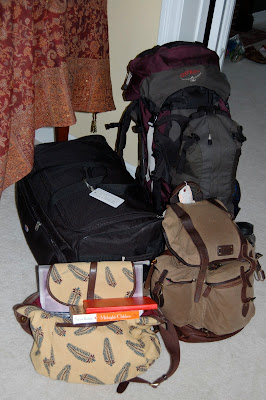
If there's one really, truly, supremely maddening paradox about this whole moving-to-another-continent business, it is this: in order to live with fewer possessions, one must first acquire more possessions. And if there's one parallel skill that helps when squeezing your life into 2/3 of your bodyweight, it's being good at Tetris.

Good news! I'm pretty okay at Tetris.

Tuesday, March 27, 2012
Malawhat?: Frequently Asked Questions
Wait, so where are you going?
Malawi -- or, as it's known in the United States, "the place that Madonna's adopted baby came from."
Where's that?
When?
Mid-June 2012 to August 2014.
What will you do there?
I'll teach English in a secondary school, probably in a rural area, probably in a crowded classroom, probably without enough desks, very probably without enough books to go around, most definitely in a way that changes me forever.
Will you live in a mud hut?
Maybe! There's a wide variance in living situations, and it's hard to predict what mine will be. Here's what I do know: I'll spend the first two to three months living with a Malawian family, and when I'm officially sworn in as a volunteer and assigned to a village sometime in August, I'll move into a house of my own for two years. Most volunteer houses have brick walls, concrete floors, and a corrugated tin roof, but a mud hut is also a possibility.
Either way, I'm mostly dreaming about the backyard chickens I'll have.
Will you be totally cut off from the rest of the world?
Yes and no -- for the first two or three months, for example, I won't have internet or phone access at all. But letters are a totally viable option! And I can promise drawings to anybody who wants 'em, or even anybody who doesn't want 'em. You're getting sketches of children and mango trees whether you like it or not, basically is what I'm saying.
Also, despite my antiquated ways, and despite the fact that I made a pact to never do so (shout-out to friendship), I'm making the leap into smartphone territory. On the one hand, this is terrible, but on the other hand, it is wonderful, and here's why: after training I'll be able to send words and pictures through the air, over the ocean, through a series of tubes, via a device I still don't really understand, to YOU. At least in theory.
How safe is this, exactly?
Safer than the public perception of Africa might lead you to believe. A small dose of common sense goes a long way, and I like to think I have some measure of that.
(Any gaping holes in my common sense have been patched up by this very basic lesson I learned in Tanzania: cover cuts with Band-aids.)
Wait, so...what made you decide to do this?
If you ask me this in person, I'll probably say (quite truthfully) that I don't remember making the decision. I just always knew it would happen, and I knew it in the same instinctive, visceral way that I knew I liked horses when I first found out they had veiny velvet faces and long broad backs that can carry you places -- "I love this, I'm fascinated, and I want this to be a part of my life." In the Peace Corps, you can live in a developing country for two years and contribute to meaningful work, so it was easy -- "I love this, I'm fascinated, and I want this to be a part of my life." There was never really a choice.
If you get me really warmed up, I might try to explain the deeper reasons, which are tangled up in both curiosity and conscience, and I might say something like this: the kaleidoscope of life on this planet keeps me dazzled everyday, but the puzzle of inequity keeps me up at night. An accidental alchemy of geography, economics, and sheer randomness presents some of us with staggering opportunities while others do without -- and I'd be wasting my time here if I didn't do something to help change that.
Will you bring me back an elephant?
Be careful what you wish for.
What language will you be learning?
Probably Chichewa, which I am already loving. It has adorably African-accented pronunciations of English words (a biscuit, for example, is a "bisiketi"), tongue-twisting verb conjugations, and lilting morsel-like phrases that hang in your ear like miniature tunes. I'm convinced that "sangalala" is the most perfect, emotively onomatopoeic word in human creation. It means "happy," and it is.
This is a good example of Chichewa -- and a good visual context for Malawi! "Kamphopo," by The Very Best. I dare you not to smile.
I wish I had done something like this when I was your age. [usually said with a wistful but resigned sigh]
You still can! In fact, you should. There's no upper age limit, and older volunteers with more maturity, more life experience, and more skills have the most to offer!
Are you scared?
Of my dreams coming true? A little.
Malawi -- or, as it's known in the United States, "the place that Madonna's adopted baby came from."
Where's that?

Mid-June 2012 to August 2014.
What will you do there?
I'll teach English in a secondary school, probably in a rural area, probably in a crowded classroom, probably without enough desks, very probably without enough books to go around, most definitely in a way that changes me forever.
Will you live in a mud hut?
Maybe! There's a wide variance in living situations, and it's hard to predict what mine will be. Here's what I do know: I'll spend the first two to three months living with a Malawian family, and when I'm officially sworn in as a volunteer and assigned to a village sometime in August, I'll move into a house of my own for two years. Most volunteer houses have brick walls, concrete floors, and a corrugated tin roof, but a mud hut is also a possibility.
Either way, I'm mostly dreaming about the backyard chickens I'll have.
Will you be totally cut off from the rest of the world?
Yes and no -- for the first two or three months, for example, I won't have internet or phone access at all. But letters are a totally viable option! And I can promise drawings to anybody who wants 'em, or even anybody who doesn't want 'em. You're getting sketches of children and mango trees whether you like it or not, basically is what I'm saying.
Also, despite my antiquated ways, and despite the fact that I made a pact to never do so (shout-out to friendship), I'm making the leap into smartphone territory. On the one hand, this is terrible, but on the other hand, it is wonderful, and here's why: after training I'll be able to send words and pictures through the air, over the ocean, through a series of tubes, via a device I still don't really understand, to YOU. At least in theory.
How safe is this, exactly?
Safer than the public perception of Africa might lead you to believe. A small dose of common sense goes a long way, and I like to think I have some measure of that.
(Any gaping holes in my common sense have been patched up by this very basic lesson I learned in Tanzania: cover cuts with Band-aids.)
Wait, so...what made you decide to do this?
If you ask me this in person, I'll probably say (quite truthfully) that I don't remember making the decision. I just always knew it would happen, and I knew it in the same instinctive, visceral way that I knew I liked horses when I first found out they had veiny velvet faces and long broad backs that can carry you places -- "I love this, I'm fascinated, and I want this to be a part of my life." In the Peace Corps, you can live in a developing country for two years and contribute to meaningful work, so it was easy -- "I love this, I'm fascinated, and I want this to be a part of my life." There was never really a choice.
If you get me really warmed up, I might try to explain the deeper reasons, which are tangled up in both curiosity and conscience, and I might say something like this: the kaleidoscope of life on this planet keeps me dazzled everyday, but the puzzle of inequity keeps me up at night. An accidental alchemy of geography, economics, and sheer randomness presents some of us with staggering opportunities while others do without -- and I'd be wasting my time here if I didn't do something to help change that.
Will you bring me back an elephant?
Be careful what you wish for.
What language will you be learning?
Probably Chichewa, which I am already loving. It has adorably African-accented pronunciations of English words (a biscuit, for example, is a "bisiketi"), tongue-twisting verb conjugations, and lilting morsel-like phrases that hang in your ear like miniature tunes. I'm convinced that "sangalala" is the most perfect, emotively onomatopoeic word in human creation. It means "happy," and it is.
This is a good example of Chichewa -- and a good visual context for Malawi! "Kamphopo," by The Very Best. I dare you not to smile.
I wish I had done something like this when I was your age. [usually said with a wistful but resigned sigh]
You still can! In fact, you should. There's no upper age limit, and older volunteers with more maturity, more life experience, and more skills have the most to offer!
Are you scared?
Of my dreams coming true? A little.
Subscribe to:
Posts (Atom)